
Supreme Court Clarifies Separate Liability for Trade Secret Disclosure, Acquisition, and Use
The Supreme Court recently held that, where multiple parties conspire to use trade secrets and exchange trade secrets individually acquired by each participant, the acts of disclosing and acquiring those trade secrets among conspirators may each constitute separate offenses independent of the subsequent use of the trade secrets (Supreme Court Case No. 2025 Do 11906).
Read More
IPHC Recognizes Employee Status in Employee Invention Case Despite Formal Resignation
On January 21, 2026, the Intellectual Property High Court (IPHC) issued a notable decision (Case No. 2021 Na 1015) in a dispute concerning compensation for an employee invention. The court held that an individual may still qualify as an “employee” for the purposes of employee invention compensation if he or she continues to provide substantial labor or services to the company even after formal resignation. This decision is significant because it provides further guidance on the criteria for determining “employee status” in employee invention compensation claims.
Read More
South Korea's Patent Filings Surpass 260,000, Driven by Growth in High-Tech Sectors
The Ministry of Intellectual Property (MOIP) announced that the number of patent applications filed in Korea reached 260,000 in 2025, marking the highest annual total in the country’s history. This milestone was achieved 12 years after annual patent filings first surpassed 200,000 in 2013. Korea is the fourth country in the world to record over 260,000 annual patent applications, following Japan (1984), the United States (1999), and China (2008). Having ranked fourth globally in patent filings in 2024, behind China, the United States, and Japan, Korea is expected to maintain its position as the world’s fourth-largest patent filing jurisdiction in 2025.
Read More
Patent Term Extensions in Korea: Recent Guidance on New Substances and Extended Patent Rights
The Korean Patent Act provides patent term extension for pharmaceutical patents to compensate for the period during which the patented invention could not be commercially exploited due to the time required to obtain marketing approval from the Ministry of Food and Drug Safety (MFDS). Eligibility for such an extension is strictly limited to patents covering a new substance, defined as a substance whose active moiety has a novel chemical structure responsible for its pharmacological effect. Patent term extension may be granted only once, based on the initial marketing approval, and only for a single patent, with the extension period capped at five years. In addition, under Article 95 of the Patent Act, the scope of an extended patent right is limited to acts of practicing the patented invention in connection with the approved product or, where applicable, the specific approved use of that product. Set forth below are recent court decisions addressing the scope of pharmaceutical inventions that qualify as “new substances” for patent term extension and the extent of protection afforded by extended patent rights.
Read More
The Boundary Between Personal Use Reform and Trademark Infringement in the Louis Vuitton Reform Decision
In a recent decision, the Korean Supreme Court provided important guidance on the boundary between the reform of trademarked products for personal use and trademark infringement (Supreme Court Case No. 2024Da311181). In particular, the Court clarified that the mere affixation of a registered trademark during the reform process does not automatically constitute “trademark use” under the Korean Trademark Act. The decision also established the standard for determining trademark infringement from a competition-law perspective centered on the marketplace.
Read More
The Supreme Court Recognizes Copyright Protection for Creative Golf Course Designs
In a recent copyright infringement damages case in which Lee International’s affiliate firm secured a final victory, the Korean Supreme Court established clear standards for determining the copyrightability of golf course designs, an issue on which lower courts had previously reached conflicting conclusions (Supreme Court Case No. 2024 Da 228661).
Read MoreLEE NEWS
Lee International Meets with the IPTAB to Discuss Trial Trends and Institutional Reform
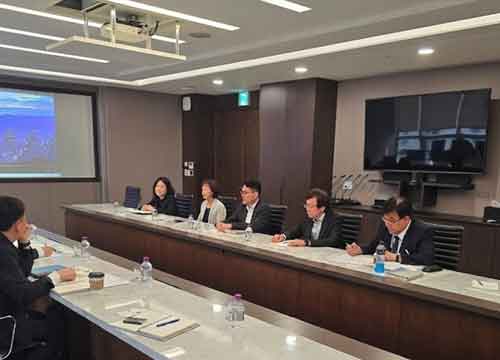
On April 17, 2026, Lee International IP & Law met with representatives of the Intellectual Property Trial and Appeal Board (IPTAB) to discuss recent developments in the patent trial landscape and potential directions for institutional reform. During the meeting, participants identified several factors contributing to the decline in the number of trial cases, including procedural changes such as the expanded availability of continued examination requests and divisional applications, as well as the growing use of invalidity defenses in infringement litigation. It was also noted that companies increasingly favor more predictable and cost-effective prosecution strategies, such as requesting continued examination, rather than pursuing trial proceedings.
 Read More
IAM Patent 1000 2026 Rankings
Lee International IP & Law has been recognized for its outstanding performance in IAM Patent 1000: The World's Leading Patent Professionals 2026, published by Intellectual Asset Management (IAM), a leading global intellectual property publication.
 Read More
Lee International IP & Law Recognized in the MIP IP Stars 2026 Rankings for Patent and Trademark Practice
Lee International IP & Law has once again been recognized as a leading intellectual property firm in the MIP IP Stars 2026 rankings published by Managing Intellectual Property (MIP), earning rankings across key patent and trademark categories. MIP is widely regarded as a leading global authority on the evaluation of IP firms and practitioners.
 Read More
Seminar on the Korea Trade Commission's Unfair Trade Practice Investigation System
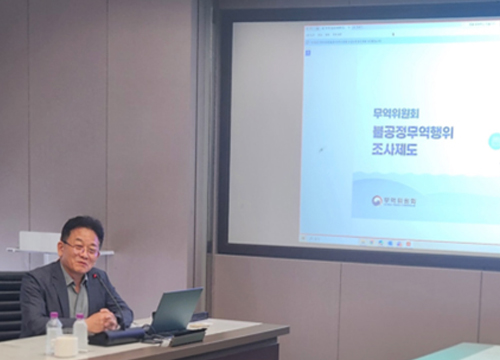
On June 19, 2026, Lee International IP & Law hosted a seminar featuring Mr. Choi Woo-Jun, Head of the Unfair Trade Investigation Division at the Ministry of Trade, Industry and Energy (MOTIE), on the topic of "The Korea Trade Commission’s Unfair Trade Practice Investigation System."
 Read More
Lee International, Senior Manager Dae-Huyn Kwon Finish the Tokyo Marathon 2026
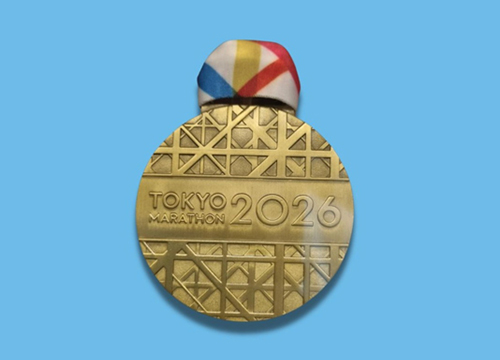
Guided by the belief that “a healthy mind resides in a healthy body,” Lee International IP & Law actively promotes the physical and mental well-being of its members through a variety of wellness initiatives. As part of these efforts, the firm established an in-house running club, “Lemarcle,” whose members train together weekly and regularly participate in marathon events both in Korea and abroad. Most recently, Senior Manager Dae-hyun Kwon marked an impressive personal milestone by completing the Tokyo Marathon 2026, held on March 1, 2026, with a finishing time of 3 hours and 17 minutes.
 Read More