
Search
Professionals
26-04-08
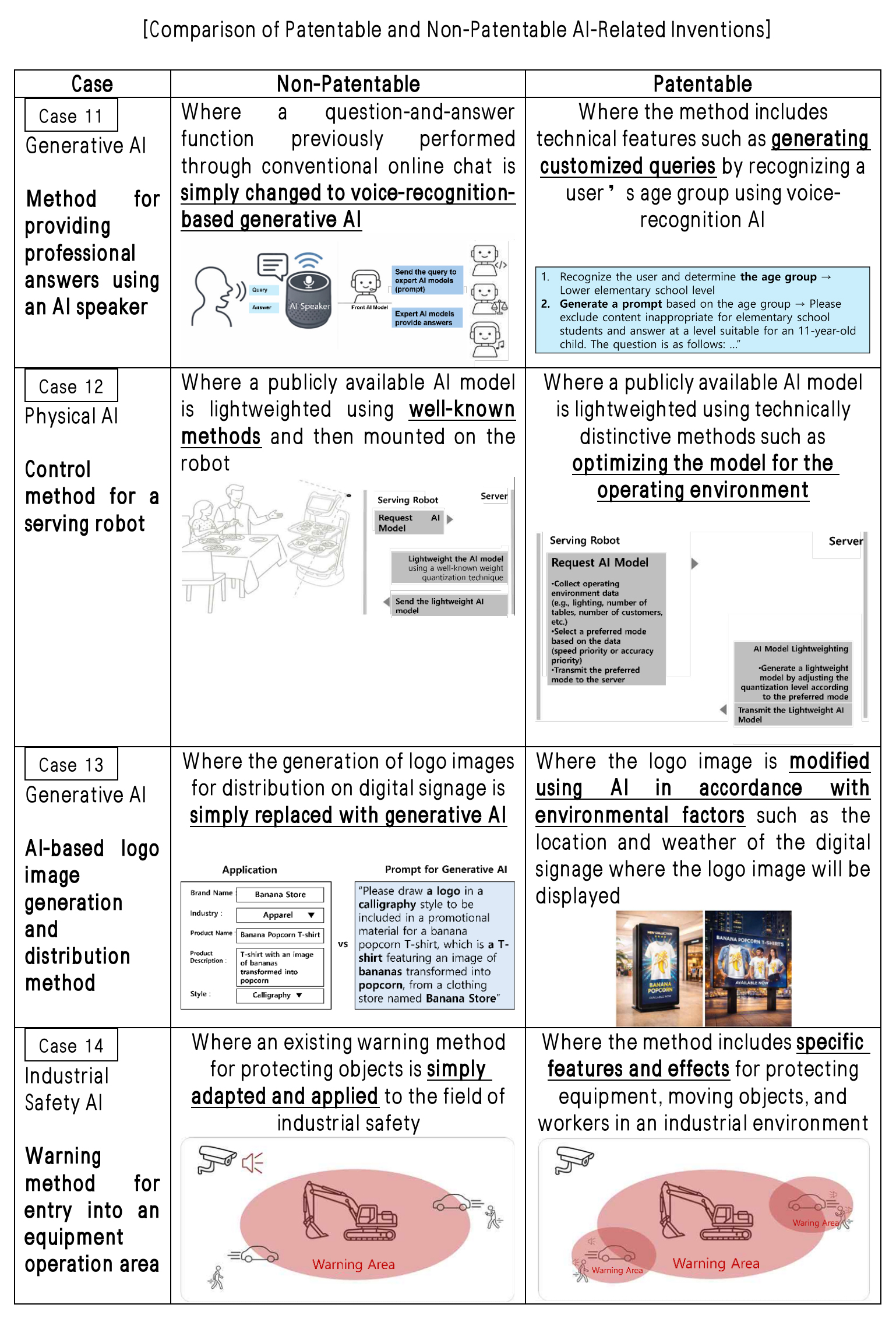
According to the Ministry of Intellectual Property (MOIP)’s Examination Guidelines for Artificial Intelligence (AI) Inventions, the inventive step of AI-related inventions is generally assessed based on whether one of ordinary skill in the art could have readily derived the invention from the prior art. In principle, inventive step is unlikely to be acknowledged where an invention merely applies well-known AI technology or simply systemizes tasks or business methods previously performed by humans using established AI techniques. By contrast, inventive step may be acknowledged where specific technical features, such as data preprocessing, machine learning methods, or trained models, are clearly defined, and produce a remarkable technical effect that would not have been predicted from the prior art.
As emerging AI technologies, such as physical AI and on-device AI, continue to rapidly expand across various industries, the MOIP issued a revised version of the Examination Guidelines for AI Inventions in January 2026, incorporating additional examination examples relating to these technologies. The newly added examples compare AI-related inventions deemed patentable with those found not to meet patentability requirements. A summary of the added examples relating to inventive step is provided below.
 SHARE
SHARE

 Go to List page